
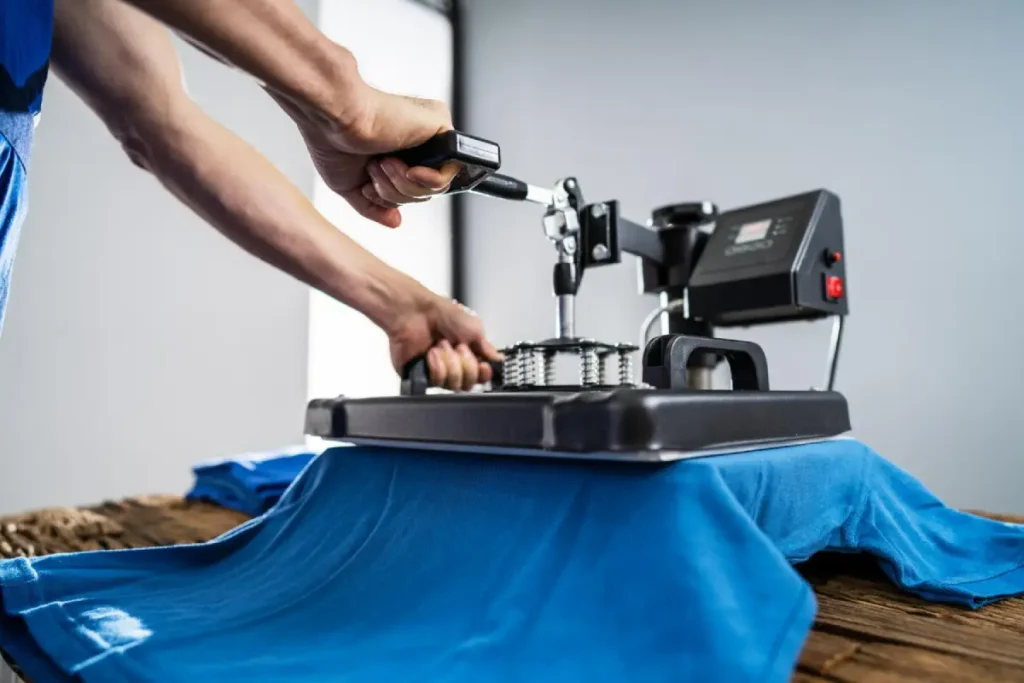
Modern garment decoration has evolved beyond simple craft into a precise discipline of materials engineering. If your studio still relies on trial-and-error, you are essentially gambling with your brand’s longevity. To dominate the high-end merchandise sector, you must view your workflow as a closed-loop manufacturing system. The market is saturated with low-grade prints; your path to profitability lies in mastering the interfacial adhesion that makes a garment feel like a premium, permanent product.
Applying dtf transfers is not merely about pressing a graphic; it is about orchestrating a polymer phase-change that must be perfectly synced with the fiber weave of your base material. When you operate with a “Parametric Manufacturing” mindset, you replace guesswork with verified, reproducible data. This transition is exactly how independent labels elevate their output to compete directly with global retail giants.
The Mechanics of Fiber-Level Bonding
To achieve the “retail-soft” hand-feel that defines a professional label, you must manage the variables that dictate how the adhesive interacts with the textile structure:
- Thermal Lag Calibration: A standard heat press display reflects the platen’s idle temperature, not the reality of the surface contact. Once a cold garment hits the metal, the temperature dips. Your dwell-time must be set to account for this recovery window to ensure the adhesive achieves its critical fusion point without scorching the fabric.
- Powder Particle Geometry: Using a single adhesive powder for every fabric is a major oversight. Performance synthetics and heavyweight cottons require different mesh sizes (PSD) to optimize how the polymer wicks into the fiber. Matching your powder mesh to the garment’s weave density is essential for wash durability.
- Oscillation-Free Cooling: During the phase-change from liquid to solid, the TPU adhesive is incredibly sensitive to mechanical agitation. Even slight vibrations or shifts in the textile during cooling can introduce micro-fractures in the bond. A stable cooling environment is the quiet hero of long-term print integrity.
[Image of a precision-calibrated heat press station with digital logging documentation]
Decentralized Production: The Hub-and-Spoke Advantage
Traditional inventory models carry a massive risk: they force you to guess what will sell before you’ve made a single dollar. Instead, pivot to a decentralized supply chain. By aligning with high-capability dtf transfers providers, you externalize the cost of high-end printing hardware while retaining total control over the garment integration. This “Asset-Light” structure turns your studio into a rapid-response unit rather than a warehouse.
If you are searching for dtf transfers near me to solve an immediate lead-time bottleneck, look for partners who can offer more than just print output. You need a partner that acts as a technical consultant—someone who can help you prototype specialized finishes or test new fabric-adhesive combinations. This symbiotic relationship keeps your overhead low and your creative velocity at maximum potential.
Establishing a “Destructive Audit” Standard
You haven’t truly validated your product until you have tried to destroy it. Implement a weekly “Retail Stress Test” protocol: subject your production samples to 10-cycle industrial laundry trials, extreme mechanical strain, and high-heat drying. When you possess the data showing your product retains 98% integrity after these trials, your sales pitch changes entirely. You stop selling a custom graphic; you sell a verified, long-life asset.
Frequently Asked Questions
Why does inconsistent platen pressure lead to edge-lift?
Pressure is what drives the adhesive into the fiber weave. If your platen is slightly off-level, the edges receive lower PSI, meaning the adhesive never reaches the required depth. Always perform a monthly level-check on your press to ensure even force distribution.
How do I maintain a breathable print on heavy graphics?
Utilize “halftone-mapping” through your design software. This converts solid blocks of color into a fine dot pattern, reducing the total volume of adhesive by 30-40% while preserving color vibrancy and fabric breathability.
Is DTF suitable for high-end synthetic sportswear?
Absolutely, provided you utilize “low-temp” curing powders to prevent dye-migration (the bleeding of garment dyes into the white ink). Always perform a small-scale thermal gradient test on a scrap piece of your specific synthetic fabric before starting a production run.
What is the most reliable way to audit production output?
The “Stress-to-Failure” protocol. Run one unit from every batch through an industrial-grade wash and high-heat dry cycle. If the print shows zero degradation after five cycles, your current process parameters are fully optimized for the premium retail tier.
Building a high-quality apparel label is a journey of continuous technical refinement. By mastering the potential of dtf, you position your brand to compete at the highest level of the custom merchandise market. Harwin is committed to providing the industry insights you need to turn your production floor into a professional, profitable enterprise. Start optimizing your workflow today—your commitment to quality is the most valuable investment you can make for your brand’s future.